What Is a Push Open Door?

Time:2026-09-11 Author:Aria
0%

A Push Open Door is a door designed to open when pressure is applied to its front surface. It usually works with a touch latch, magnetic catch, or spring-loaded mechanism. Instead of using a visible handle, the user presses a specific area, and the door releases smoothly. This creates a clean appearance, especially in modern kitchens, wardrobes, offices, and retail interiors. The movement feels simple, but the hardware behind it needs careful selection.

Good performance depends on the door’s weight, material, alignment, and daily use. A light cabinet panel may need only a small push latch. A heavier interior door may require stronger hinges, a reliable catch, and accurate installation. The gap around the door also matters. If it is too narrow, the panel may bind. If it is too wide, the door can feel loose or fail to stay closed. Practical installers usually test the mechanism repeatedly before final adjustment. Small errors become obvious after hundreds of openings.

A Push Open Door can improve accessibility when users have limited hand movement, yet it is not automatically suitable for every space. Finger pressure, closing force, and emergency access should be considered. Some systems produce a noticeable click, while others feel almost silent. That difference can affect bedrooms, clinics, or quiet work areas. The concept sounds effortless. It is not always effortless. Proper maintenance, compatible hardware, and honest testing determine whether the door remains convenient over time. This guide explains its operation, benefits, limitations, and selection points in clear, practical terms.
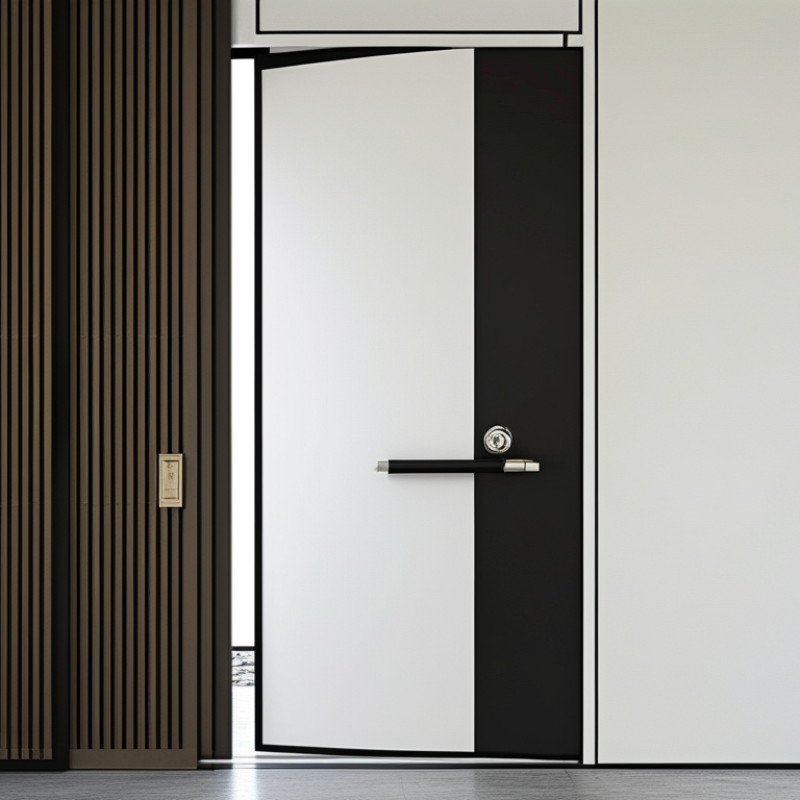
What Is a Push Open Door?

Definition and Basic Function of a Push-Open Door

What Is a Push Open Door?

A push-open door uses pressure instead of a visible handle. Press the front panel, and an internal spring mechanism releases the catch. The door then moves outward slightly, giving you space to pull it open. When closing the door, press the panel until the mechanism clicks into place. This simple action creates a clean, handle-free appearance for cabinets, storage units, and some interior doors.

The basic function depends on accurate alignment. The latch, door panel, and frame must meet correctly. If the gap is uneven, the door may open weakly or fail to stay closed. In real installations, small measurements matter more than expected. Dust, loose screws, or a worn spring can also affect performance. A push-open system is not automatically powered. It usually works through mechanical pressure and spring tension. That distinction is easy to miss.

Tips: Press near the latch area, not only at the panel’s edge. Keep the contact surface clean and dry. Check the screws if the door feels loose. Avoid forcing the panel when it does not release. A short adjustment may solve the issue, but not always. Some doors need better alignment or a replacement mechanism. Test the opening several times after installation, especially when the door is heavy or frequently used.

Main Components and How the Opening Mechanism Works

What Is a Push Open Door?

A push open door uses pressure instead of a visible handle. It is common on cabinets, wardrobes, and minimalist interior doors. Its clean front depends on a small, carefully adjusted mechanism.

The main components are a touch latch, a strike plate, mounting screws, and the door panel. Some systems also include a spring-loaded ejector. When the door is closed, the latch holds the strike plate. A light push releases that hold. The spring then moves the door outward by a few millimeters. You can grip the exposed edge and open it fully. Closing the door compresses the spring and resets the latch. The exact movement depends on door weight, hinge alignment, and latch strength. Heavy panels may need two latches. That detail is easy to overlook.

Tips: Press near the latch, not only at the corner. Keep the strike plate aligned with the latch. A soft click usually indicates engagement. If the door rebounds, the spring may be too strong or the panel may be misaligned. Adjust slowly. I have found that a tiny screw adjustment can change the feel noticeably. Still, not every sticking door needs new hardware. Dust, loose screws, or a swollen wood edge can create the same symptom. Test the door several times after each adjustment. An imperfect fit often reveals itself only after repeated use.

What Is a Push Open Door? - Main Components and How the Opening Mechanism Works
Component or Data Dimension Primary Function How It Works in a Push Open Door System Typical Characteristics and Practical Considerations
Door Panel Forms the movable barrier that opens and closes the doorway. A light push transfers force to the latch or touch mechanism. The panel then moves outward, inward, or along a track, depending on the door design. Common materials include solid wood, engineered wood, glass, metal, and composite panels. Panel weight affects the required hardware capacity.
Push Latch Keeps the door closed without a visible handle and releases it when pressed. The first push disengages the internal catch. The latch then projects the door slightly away from the cabinet or frame so the edge can be gripped. Often uses a spring-loaded plunger and catch plate. Correct alignment is essential for reliable engagement.
Touch-to-Open Mechanism Detects manual pressure and initiates the opening movement. Pressure on the front compresses a spring or activates a mechanical trigger. The stored or released force creates a small opening gap. Mechanical versions do not require electricity. The activation force should be low enough for comfortable use but high enough to prevent accidental opening.
Spring-Loaded Plunger Provides the force that pushes the door away from its closed position. When the latch is released, a compressed spring extends the plunger against the rear side of the door panel. Spring strength must match the door weight and hinge resistance. Excessive force may cause panel bounce or hardware stress.
Catch Plate or Receiver Receives and holds the latch when the door is closed. The latch enters the receiver as the door closes. Pressing the panel releases the latch from the receiver. The receiver is usually fixed to the cabinet, frame, or opposing door component. Its position controls closing accuracy.
Hinges Support the door and guide its rotational movement. After the push latch creates an opening gap, the hinges allow the door to swing through its designed opening angle. Concealed hinges are common in handleless furniture. Hinge adjustment can correct uneven gaps and improve alignment.
Soft-Closing Damper Controls the final closing movement and reduces impact. As the door approaches the closed position, the damper absorbs kinetic energy and slows the panel before the latch engages. Dampers improve noise control and reduce repeated shock loads. They must be compatible with the door mass and closing speed.
Door Frame or Cabinet Carcass Provides the fixed structure against which the door closes. The frame holds the hinges, latch receiver, and other hardware in fixed positions so the opening mechanism can operate consistently. A rigid, square structure helps maintain even gaps and prevents the latch from binding.
Opening Gap Creates enough clearance for the user to grasp the door edge after activation. The push mechanism typically ejects the door a short distance from the closed plane. The user then pulls the panel fully open. The required gap depends on the door profile, edge shape, and hardware design. A gap that is too small can make the door difficult to grip.
Closing Sequence Returns the door to a secure, flush position. The user pushes the panel toward the frame. The latch compresses and then locks into the receiver when the door reaches the closed position. The closing path should be free from obstructions. Misalignment can cause incomplete latching, excessive force, or premature wear.
Required User Force Defines the amount of pressure needed to activate the mechanism. A brief press on the door front releases the latch. The actual force depends on spring tension, friction, door weight, and hardware adjustment. There is no single universal force rating for all push-open systems. Manufacturers generally specify compatible door sizes and hardware loads.
Installation Alignment Ensures that the latch, receiver, hinges, and door panel meet at the correct positions. Accurate installation allows the plunger to contact the panel squarely and allows the latch to enter the receiver without rubbing. Uneven gaps, a door that will not stay closed, or a latch that requires excessive pressure are common signs of alignment problems.
Maintenance Requirement Preserves smooth operation and extends hardware service life. Periodic inspection checks screws, alignment, spring action, latch engagement, and hinge movement. Dust and debris should be removed from contact points. Avoid applying unsuitable lubricants to mechanisms that are designed to operate dry. Replace damaged springs, plungers, or receivers when necessary.
Main Advantages Provides a clean, handle-free appearance and simple front access. The user opens the door by pressing its front rather than pulling a knob or lever. Useful for minimalist cabinetry, flush furniture fronts, and applications where external handles are undesirable.
Common Limitations Identifies conditions that may affect performance. The mechanism depends on accurate alignment, suitable door weight, adequate clearance, and correctly adjusted hinges. Fingerprints may appear on frequently pressed surfaces, and accidental pressure can open the door if the system is not properly adjusted.

Common Types and Materials of Push-Open Doors

What Is a Push Open Door?

Common Types and Materials of Push-Open Doors

A push-open door uses pressure instead of a visible handle. Pressing the panel activates a spring-loaded catch, which releases the door smoothly. This design suits kitchens, wardrobes, storage walls, and minimalist offices. In daily use, a firm push near the panel edge usually works best. Weak catches can cause repeated pressing and user frustration.

Common types include touch-latch cabinet doors, concealed pivot doors, and push bars for larger access doors. Touch-latch systems are compact and practical for MDF or plywood panels. Pivot doors create a wider opening, but their hinges need accurate alignment. Push bars serve a different purpose and require careful safety evaluation. The International Building Code and local accessibility rules should guide public installations.

Materials affect weight, durability, and maintenance. Solid wood offers a warm surface but may expand with humidity. MDF provides a stable, paint-ready panel, while plywood resists screw pull-out better. Tempered glass adds light, but fingerprints remain visible. Aluminum is lightweight and moisture-resistant. Laminate surfaces handle frequent contact effectively. Grand View Research valued the global doors market at about USD 140 billion in 2023, reflecting continued demand for varied door systems. The report also identifies renovation and space-efficient design as important growth factors. However, market figures do not guarantee product quality. On-site testing still matters. Check the catch, panel weight, gap, and closing force before installation. A beautiful handleless door can still feel awkward when alignment is slightly wrong.

Installation Requirements and Step-by-Step Operation

A push-open door uses a spring-loaded mechanism instead of a visible handle. Pressing the front releases the catch, allowing the door to open slightly. Pressing it again closes the door against the latch. This design works well for cabinets, storage units, and some interior doors, but it needs accurate installation. A twisted panel or uneven frame can make the mechanism unreliable.

Check the door weight, panel thickness, hinge type, and available clearance before installation. The mounting surface must be solid and clean. Measure the mechanism position from the door edge, then mark the fixing points carefully. Install the catch on the cabinet frame and the receiving part on the door, keeping both pieces level. Use suitable screws, but avoid overtightening them. That mistake can damage the panel.

Adjust the hinges until the door sits evenly, with a consistent gap around its edges. Press the door near the catch and listen for a clear release. Push it again to test the closing action. If the door opens too far, inspect the spring tension or adjust the catch position. If it stays closed, the parts may be misaligned by only a few millimeters. In practice, the first adjustment is rarely perfect. Test the door repeatedly with gentle pressure, because a firm push can hide a weak installation. Keep fingers clear during testing, especially around heavy panels.

Advantages, Limitations, and Typical Applications

A push-open door uses a spring-loaded catch instead of a visible handle. Pressing the panel releases the latch, allowing the door to open with a light click. This system supports clean, uninterrupted surfaces in kitchens, wardrobes, bathrooms, and office storage. It also improves access when both hands are occupied. In compact rooms, the handle-free face can make cabinetry appear less crowded. The 2024 NKBA Design Trends Report identifies streamlined detailing and concealed hardware as continuing priorities in kitchen design, which supports this application.

The main advantage is visual simplicity. Fewer projecting handles also reduce snagging on clothing and nearby furniture. Installation can be fast when the cabinet structure is accurate. However, push-open hardware needs careful alignment. Dust, swollen wood, or a weak spring may cause unreliable release. It can also open accidentally when a person leans against the panel. That matters in busy kitchens and narrow corridors. A 2024 report from Grand View Research places continued growth in the global furniture hardware market, driven partly by renovation and functional design demand. The figure is useful, but it does not prove every push-open product will perform well.

These doors suit minimalist apartments, handle-free media units, and concealed storage in hospitality interiors. They are less suitable for heavy doors, high-traffic cupboards, or areas needing immediate visual identification. I have found that users often value the appearance first, then notice maintenance later. That lesson is easy to miss. A small recessed pull or damped catch may provide better reliability where frequent opening is expected.

FAQS

: What is a push-open door?

: It opens when you press its front panel. A hidden spring mechanism releases the latch.

How does the opening mechanism work?

Pressing the panel releases the latch from the strike plate. The spring moves the door outward slightly.

What parts does the system include?

Common parts include a touch latch, strike plate, mounting screws, and door panel. Some systems include an ejector spring.

How should I press the door?

Press near the latch area, rather than only at the edge. A light, firm push is usually enough.

Why does a push-open door fail to stay closed?

The latch and strike plate may be misaligned. Dust, loose screws, swollen wood, or a worn spring can also interfere.

Why does the door rebound after pressing?

The spring may be too strong, or the panel may sit incorrectly. Adjust the mechanism slowly and test it repeatedly.

What are the main advantages?

The surface looks clean without a visible handle. It also reduces snagging on clothing and nearby furniture.

Where are push-open doors useful?

They suit cabinets, wardrobes, bathrooms, offices, and compact living spaces. They work well where a smooth front matters.

When might this system be unsuitable?

Heavy doors and busy cupboards may need stronger or different hardware. Accidental opening can happen in narrow areas.

How can I maintain reliable performance?

Keep contact surfaces clean and dry. Check loose screws and alignment. A tiny adjustment may help, but not always.

Conclusion

A Push Open Door is a door designed to open when gentle pressure is applied to its front surface, eliminating the need for a visible handle or knob. Its main components typically include the door panel, hinges or pivot hardware, a push-latch mechanism, and a strike or catch. When pressure is applied, the latch releases and allows the door to move outward; pressing it again can secure the door in the closed position. Some systems may use spring-loaded, magnetic, or touch-release mechanisms.

Push Open Doors are available in styles such as cabinet doors, interior passage doors, sliding panels, and concealed doors, and may be made from wood, glass, metal, or composite materials. Proper installation requires accurate measurements, level alignment, secure hardware, and sufficient clearance for movement. Their clean appearance, convenient operation, and space-saving design make them suitable for homes, offices, storage areas, and modern interior spaces. However, they may require careful adjustment, can open accidentally under strong pressure, and may be less suitable for locations needing enhanced security or frequent heavy use.


Aria

Aria

Aria is a dedicated marketing professional with a deep passion for innovative strategies and a keen understanding of our company's product offerings. With a wealth of experience in the industry, Aria excels at crafting engaging content that highlights the unique features and benefits of our......